
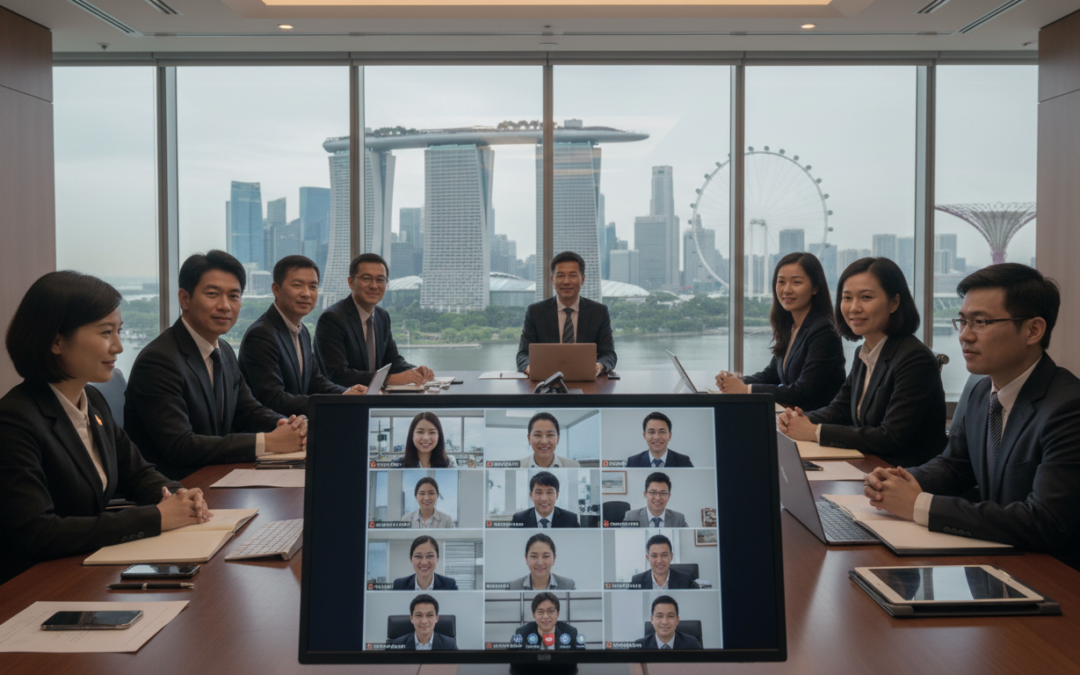
Can a distributed board really run a legally watertight annual general meeting from different countries?
This guide helps any business understand how to deliver a legally valid virtual AGM from planning and notices through voting, minutes and filing. It focuses on non‑SGX listed firms operating across time zones and uses practical steps for overseas directors, shareholders and digital‑first teams.
Missing statutory timelines, using an invalid meeting format or passing resolutions without proper notice can create regulatory exposure and governance disputes. In practice, compliance means correct timelines, valid notice, quorum, proxy handling, secure voting and reliable record‑keeping.
We preview how to choose between a virtual or hybrid meeting, check your constitution, communicate with shareholders, set up technology and file post‑meeting annual returns. The post‑July 2023 framework allows many non‑listed companies to continue online meetings when done properly.
Key Takeaways
- Follow statutory timelines and give proper notice to avoid disputes.
- Verify your constitution before deciding on a meeting format.
- Ensure quorum, proxy rules and secure voting are in place.
- Plan technology and communications for overseas directors and shareholders.
- Keep clear minutes and complete post‑meeting filings promptly.
Understanding AGM obligations for Singapore companies operating remotely
A clear annual meeting lets members review accounts, ask questions and hold directors to account. The annual general meeting is the statutory forum where financial statements are tabled and members vote on routine and special business.
What an annual general meeting is and what it must achieve
The core purpose is accountability: shareholders receive the accounts, question the board and approve key resolutions. Only matters set out in the notice may be voted on, so proper notice is essential for legal validity.
Who must hold AGMs, and what changes if an AGM is exempted or dispensed with
Unless a formal dispensation applies, companies must hold an annual meeting each year. Even when an exemption is granted, statutory filings such as Annual Returns still must be made on time.
Roles: shareholders, directors, chairman and company secretary
Shareholders vote, pose questions and approve resolutions. Directors prepare and present accounts and recommend resolutions. The chairman directs proceedings; if none is named, members may elect a chair for that meeting.
The company secretary is the compliance anchor: preparing notices, coordinating documents and ensuring records are complete. Failing to include special business in the notice is a common pitfall for distributed teams.
| Role | Primary duty | Key risk if neglected |
|---|---|---|
| Shareholders | Vote and question management | Decisions challenged post-meeting |
| Directors | Approve and present accounts | Incorrect financial approvals |
| Company Secretary | Prepare notices and records | Invalid notices or missing filings |
For more on procedural terms and obligations, review the terms and conditions that often guide secretarial processes.
Deadlines and timelines you must meet to stay compliant
Start with the meeting date and plan every task backwards. Choose the final day first, then schedule board sign‑offs, notice distribution and post‑meeting filings so nothing is rushed.
Key statutory timing rules
First meeting must take place within 18 months of incorporation. After that, hold one each calendar year and ensure no gap exceeds 15 months between meetings.
Financial year and account cut‑offs
For non‑listed firms, the meeting must be held within 6 months after financial year end. Accounts presented should be made up to a date no more than 6 months before the meeting date.
Practical planning checklist
- Work backwards from the meeting to allow board approval and audit reviews.
- Send notice plus documents at least 14 days before the meeting.
- File Annual Returns promptly after the meeting to meet statutory requirements.
Tip: Factor in time zones and signer availability. Good document hygiene prevents last‑minute errors and keeps your governance and compliance robust.
When virtual and hybrid AGMs are allowed in Singapore now
New rules after 1 July 2023 allow many non‑listed entities to hold meetings electronically even though the COVID emergency measures ended on 1 July 2023.
This means firms can lawfully run fully online or mixed-format gatherings where the constitution previously assumed in‑person attendance. Directors should still record the decision, explain the format in the notice and confirm procedures for voting, proxies and questions.
Why the constitution no longer blocks online formats
If the company constitution refers to physical meetings, recent legislation provides an alternative route to proceed electronically. Documenting the board’s rationale helps manage governance risk and shows shareholders the process was deliberate and fair.
Choosing between fully online or hybrid formats
Decide by assessing shareholder demographics, director locations and agenda complexity.
- Fully online suits dispersed directors and straightforward resolutions.
- Hybrid helps less tech‑confident shareholders attend in person while keeping access for overseas participants.
- Use real‑time messaging for questions and integrated voting tools for speed and traceability.
| Format | Best for | Key benefit |
|---|---|---|
| Online | Overseas directors, simple agenda | Lower logistics, faster throughput |
| Hybrid | Diverse shareholder tech skills | Greater accessibility and choice |
Practical tip: engage a reputable provider early when scale, security or vote integrity matters. Technology should enable, not replace, the chairman’s direction and fair handling of shareholder questions.
virtual agm compliance singapore remote company: governance checks before you call the meeting
Before you issue notice, run a formal governance check to make sure every procedural box is ticked.
Review the company constitution
Start by reading the company constitution for meeting procedure, quorum thresholds and proxy rules.
Check required wording, timelines and any prescribed voting mechanics so notices and forms match the document.
Confirm the chairman and meeting direction
If the constitution is silent on a chair, members may elect one at the meeting. Agree in advance how the chairman will manage questions and procedural rulings.
Prepare attendance, quorum and proxies
Decide how you will verify quorum when members join online and keep clear logs as evidence.
Ensure proxy forms, submission deadlines and validation checks align with the constitution before votes are collected.
Set a focused agenda and own the process
Distinguish ordinary business from special business. Only resolutions included in the notice should be put to a vote.
The company secretary or a trusted secretarial service should own documentation, record integrity and final compliance checks so governance risks are minimised and statutory requirements are met.
Preparing the notice, documents and shareholder communications
A well-crafted notice and tidy document pack stop late surprises and help members prepare their votes. Draft the notice so logistics, the meeting link or venue and the full list of resolutions are clear. Mark any special business and attach explanatory notes so no motion can be challenged as improperly noticed.
Notice and resolution control
Specify quorum rules, voting methods and proxy deadlines in the notice. Use plain language and include the key dates tied to the financial year end where relevant.
Distributing accounts and supporting reports
Send financial statements, directors’ and auditors’ reports with the notice at least 14 days before the meeting. Keep evidence of delivery by email receipts or registered post so shareholders can be shown they received the required information.
Remote-friendly Q&A and document access
Set up a moderated question flow: written submissions, real-time messaging and grouped answers to reduce repeats. Allow time for live questions but encourage pre-submitted queries to improve clarity.
- Package documents as short summaries plus full reports for easy reading.
- Provide version control and a secure repository with read logs for members to access data before and during the meeting.
- Assign a contact so shareholders know which service will help with access or technical queries.
| Task | Action | Evidence |
|---|---|---|
| Notice | Include logistics & resolutions | Email copy / postal record |
| Accounts | Dispatch with notice (≥14 days) | Delivery receipts |
| Repository | Secure access, audit trail | Access logs |
Good communication management cuts meeting length and improves outcomes for businesses with overseas shareholders while keeping governance and compliance intact.
Setting up the virtual meeting system and provider support
A reliable provider reduces distractions so directors and members can focus on governance, not glitches.
What to expect from services
Define functional needs: secure attendance controls, identity checks, integrated voting and polling, moderated messaging and exportable logs.
Ensure documents are hosted in a secure repository with version history and access records.
Dress rehearsals and chairman scripts
Run a dry run with the board, chairman, moderators and secretarial staff. Test handovers, audio, screen sharing and vote counts.
Prepare a chairman script covering opening remarks, housekeeping, voting directions, Q&A sequencing and contingency notices.
Contingency and data protection
Agree backup links or servers and rules for adjournment so meeting validity is preserved under your constitution.
Insist on encryption, role‑based access and clear retention policies to protect sensitive data and documents.
“Choose a provider that produces transparent audit trails and supports corporate governance through record integrity.”
How providers strengthen governance
Reputable providers offer exportable audit logs, independent vote reports and professional support. This helps evidence fairness and consistent management of meetings year after year.
Running the virtual AGM: quorum, proxies and voting without pitfalls
Practical execution on the day protects resolutions from later challenge and keeps members confident.
Verifying attendance and quorum so the meeting is valid
Confirm attendance early and record time‑stamped logs. Check that the required quorum is present before substantive business starts.
If the constitution is silent, ensure at least two members or proxies are present. Save screenshots, roll calls and system logs as evidence that quorum was established.
Managing proxies correctly
Validate proxy appointments against the constitution and the stated cut‑off time. A proxy does not have to be a member, but the appointment form must be complete.
- Log received proxy forms with timestamps and identity checks.
- Record who each proxy represents and whether they can vote on a show of hands.
- Reject or flag incomplete appointments and note the reason on the record.
Executing voting fairly: show of hands versus poll
A show of hands may not allow proxies to vote unless the constitution permits it. Use a poll for clear, auditable results when proxies or absentee votes matter.
Polls provide exportable vote tallies and cut down disputes. Make the voting method clear in the notice and repeat instructions when the vote opens.
Handling member questions in real time
Moderate questions to keep the meeting efficient. Categorise repeats, timebox live queries and let the chairman address material shareholder concerns.
Provide a named contact for technical support, a moderator for the Q&A flow and a secretarial lead to log answers and follow‑ups.
| Role | On‑day duty | Why it matters |
|---|---|---|
| Moderator | Manage Q&A and chat | Prevents interruptions and groups repeated questions |
| Technical support | Resolve connections and voting issues | Keeps meetings running smoothly |
| Secretarial lead | Validate proxies and record votes | Provides evidence for future compliance |
“A concise, documented playbook for quorum checks, proxy handling and polling is the best defence against procedural challenge.”
After the meeting: minutes, records and annual returns filing
After the meeting, prompt administrative steps turn minutes and votes into an enforceable corporate record.
Recording minutes properly and obtaining the required sign-off
Finalise written minutes that record resolution text, voting outcomes and key questions raised. Include references to evidence such as poll reports, attendance logs and exported vote tallies.
The chairman must sign the minutes. When signatories are overseas, use secure digital signatures or a staggered sign‑off workflow with time‑stamped approvals to keep the record valid.
Maintaining statutory records for ongoing regulatory compliance
Update statutory registers and retain meeting artefacts in a retrievable, organised format. Keep attendance records, proxy forms and Q&A logs together with the minutes.
Good records management reduces risk on audit and supports long‑term regulatory obligations.
Filing annual returns after the meeting
Prepare the annual returns for filing on BizFile+ promptly after the meeting. Even when the meeting is exempted or dispensed with, annual returns still require submission on time.
Consider engaging a professional secretarial service to manage filings, deadline tracking and statutory records. Outsourced services scale well for dispersed teams and help ensure ongoing regulatory compliance.
Conclusion
Running meetings across time zones brings efficiency and inclusivity. Treat every session as a formal statutory event and document each step so records withstand scrutiny.
Recap the end‑to‑end pathway: governance checks, timeline discipline, clear notices, secure technology, verified quorum and proxies, fair voting and prompt post‑meeting filings.
Decide format by need: choose fully electronic for dispersed directors, or hybrid when shareholder access or complex resolutions demand in‑person options.
Assign clear ownership — chairman direction, a secretarial lead and a technical moderator — and use reputable services and a trusted provider to reduce burden and protect record integrity.
Next steps: confirm deadlines, check the constitution, lock the platform, issue notices, rehearse, run the meeting, finalise minutes and complete filings.
FAQ
What is an annual general meeting and what should it achieve?
Who must hold an annual general meeting and when can it be exempted or dispensed with?
What are the typical roles of shareholders, directors, the chairman and the company secretary at a meeting?
When must the first AGM be held after incorporation and what is the maximum interval between meetings?
What are financial year end deadlines for non‑listed companies?
How do I align financial statement cut‑off dates with the meeting date?
How far in advance must notice and meeting documents be issued?
Are virtual or hybrid formats permitted now that the temporary COVID‑19 measures ended on 1 July 2023?
What if my constitution specifies only physical meetings—can I still hold an electronic meeting?
How do I choose between fully online and hybrid meetings for overseas directors and shareholders?
What governance checks should I perform before calling a meeting?
How do I confirm the chairman and the meeting “direction” process if not specified?
What should be included when drafting the Notice of Meeting to ensure only properly‑noticed resolutions are voted on?
When and how should financial statements and reports be distributed?
How can I design a remote‑friendly Q&A process that encourages meaningful participation?
What features should I look for in a provider for online or hybrid meeting services?
Why is a dry run important and what should it cover?
What contingency plans should be in place for technical failures?
How should privacy and security of meeting data be managed?
How can professional providers strengthen corporate governance and record integrity?
How do I verify attendance and quorum in an online meeting?
How should proxies be managed and recorded for constitutional compliance?
What voting methods work best online: show of hands versus poll?
How should member questions be handled in real time without derailing the meeting?
What are the requirements for recording minutes and obtaining sign‑off after the meeting?
Which statutory records must be maintained after the meeting?
When and how must annual returns be filed following the meeting?
What steps should be taken if an AGM is exempted or dispensed with?
How can a company secretary or secretarial service help with meeting compliance?
What are common pitfalls that lead to invalid meetings or challenged resolutions?

Dean Cheong is a Singapore-based revenue growth leader and CEO of VOffice, specializing in helping B2B companies accelerate sales performance. With deep expertise in CRM systems, go-to-market execution, and commercial strategy, he combines practical experience with a solid background in business banking and finance from Nanyang Technological University to deliver scalable, long-term growth.